Vertex Shader Model 2.0
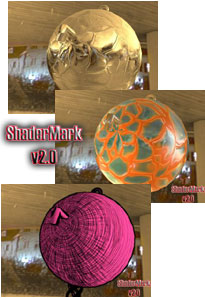
When nVidia released its GeForce 6800 there was a lot of talk about Shader Model 3.0. Lots of talk, but no action, so to speak.
However this time we do have new information and three different tests that use Shader Model 3.0. This will be a first glance of how Shader Model 3.0 can affect our view of the GeForce 6 series.The big star on the testbench is Far Cry 1.2. But not only that, we also have Shadermark 2.1 RCS where we test synthetic Pixel Shader 3.0 performance and D3D RightMark where we test synthetic Vertex Shader 3.0 performance.We like this arrangement as we can see Pixel and Vertex Shader 3.0 separately and at the same time show you the results of both in an actual game. Thus you will hopefully be little wiser by reading our article instead of those already released. 🙂For the sake of simplicity we chose to do the test with only one card and one resolution, as the purpose of this article is to determine the differences in Shader Model 3.0 compared to 2.0.
We begin with Far Cry 1.2. For the tests we use a GeForce 6800 Ultra (Extreme) on a nForce 2 400 Ultra with Athlon XP 3200+ and 1024 MB PC3200. We used the nVidia drivers 62.00 and the RC0 version of DirectX 9.0c.Update: Thanks to TERdon who pointed out that our average percentage results was misleading. This is now corrected. The average FPS results are still a bit misleading so at this point you should take them with a pinch of salt.We’ll kick off with the Far Cry 1.2 patch, which comes with a range of improvements.
Shader Model 2.0 Download
To test the performance we’ve chosen to run a few benchmark scripts supplied by nVidia for this article. The scripts do not co.
It's really impossible to tell because we don't know what you are passing to these two variables.OpenGL is column-major format, so if vPosition is in fact a vector, and uMVPMatrix is a matrix, then the first option is correct, if this is in your shader.If this is not in your shader but in your program code, then there is not enough information.If you are using the first option but getting unexpected results, you are likely not computing your matrix properly or not passing the correct vertices. Thanks to all for the help.I managed to track down the problem (For the most part). I will show what I did.It was the following line: Matrix.multiplyMM(mvpMatrix, 0, mvpMatrix, 0, mRotationMatrix, 0);As you can see I was multiplying the matrices and storing them back into one that I was using in the multiplication.So I created a new matrix called mvpMatrix2 and stored the results in that. Then passed that to my vertex shader.
Vertex Shader Model 2.0 Model 2 0 Free
//Multiply matricesMatrix.multiplyMM(mvpMatrix2, 0, mvpMatrix, 0, mRotationMatrix, 0);//get handle to shape's transformation matrixmMVPMatrixHandle = GLES20.glGetUniformLocation(iProgId, 'uMVPMatrix');//Give to vertex shader variableGLES20.glUniformMatrix4fv(mMVPMatrixHandle, 1, false, mvpMatrix2, 0);After applying this, there is no distortion (And also, with regards to my other question here I am able to translate the centre of the quad). I say 'for the most part' because however, when I rotate it, it rotates backwards (so if I say rotate +45 degrees, (Clockwise), it actually rotates the quad by -45 degrees (Anit-clockwise).But hopefully, this will help anyone who has a similar problem in the future.
New Articles
- El Arte De Amar Erich Fromm Resumen Por Capitulos Pdf
- All Player Program Do Sciagniecia
- Middle School Peer Pressure Activities For Teenagers
- Mind Your Language Season 1 Episode 1 Torrent
- Univers Family Fonts
- Defender Vista 0x80070002
- Anime Sound Effects
- Pirates Of Penzance 1994 Adobe
- Film Final Fantasy Subtitle Indonesia Warcraft
- Free Black Dots Bad Brains Rar Programs
- Divx Plus Pro 8 1 1 The Leak Doctor
- Vfr Radio Procedures In Canada Pdf
- Microsoft Desktop Publisher Software
- Escan Antivirus Crack Serial Key
- Wild Thornberrys Wildlife Rescue Mac
- Uninstall Dead Programs
- Apk Software For Pc
- Estatuto Do Torcedor Em Pdf: Full Version Software
- Wie Sie Mit Ihren Digitalkamera Fotos Geld Verdienen
- Espacio De Almacenamiento Insuficiente Para Procesar Este Comando Windows Installer
- Watch 2017 Cinema Online My Scientology Movie
- Isuninst Silent Uninstall
- Trutech Tt320 Dvd Player Manual In
- Installer Windows Xp Asus Eee Pc 701
- Paradox Neware Serial Number