Windows Xp To Windows Vista Upgrade
Are you looking for a tutorial to upgrade XP to Windows 7 (installation)? The following guide will provide the needed help to upgrade Windows XP to Windows 7 on your computer. Microsoft has made this fairly easy by providing a installation wizard that will guide you in installing windows 7.You will have to basically select the “Custom (advanced)” option during Windows 7 installation. This is a “clean” install and it does not preserve your programs, files, or settings. Prepare to upgrade Windows XP to Windows 7:Before you upgrade your PC running Windows XP to Windows 7, make sure that you have an external hard disk (if you have large amounts of data on your PC) or any other storage media with good storage capacity.
The storage media is required to transfer all files and settings from the computer running windows XP.You must also ensure that you have all the original installation discs or setup files for all the applications currently running on your system, which you intend using on Windows 7 after the upgrade.Custom installation is the only available method for upgrading from Windows XP to Windows 7. This does erase everything on the PC before installing windows 7 and for this reason, it is sometimes referred to as “clean” installation.
Windows Xp Upgrade Advisor
Upgrade XP to Windows 7 (Custom Installation):. 1. The first step in installing windows 7 on a computer running Windows XP is determining whether to install on your PC. Since Microsoft provides both the 32-bit and the 64-bit discs in the Windows 7 package, the choice depends on whether the computer’s processor is capable of running a 64-bit Windows OS. 2. The next step is downloading and running to determine the compatibility of the computer’s hardware and other plugged in devices. This tool will report all incompatibilities, if any.
You may then then act on the recommendations in the report to make it compatible. It is recommended to run the advisor again to ascertain whether Windows 7 can be installed without any issues. 3. After preparing the computer’s hardware for installing windows 7, you may transfer all Files and settings on the computer to an external hard disk using another freeware called. You may optionally run an antivirus program to make sure all the files are clean before transferring them to an external hard disk.
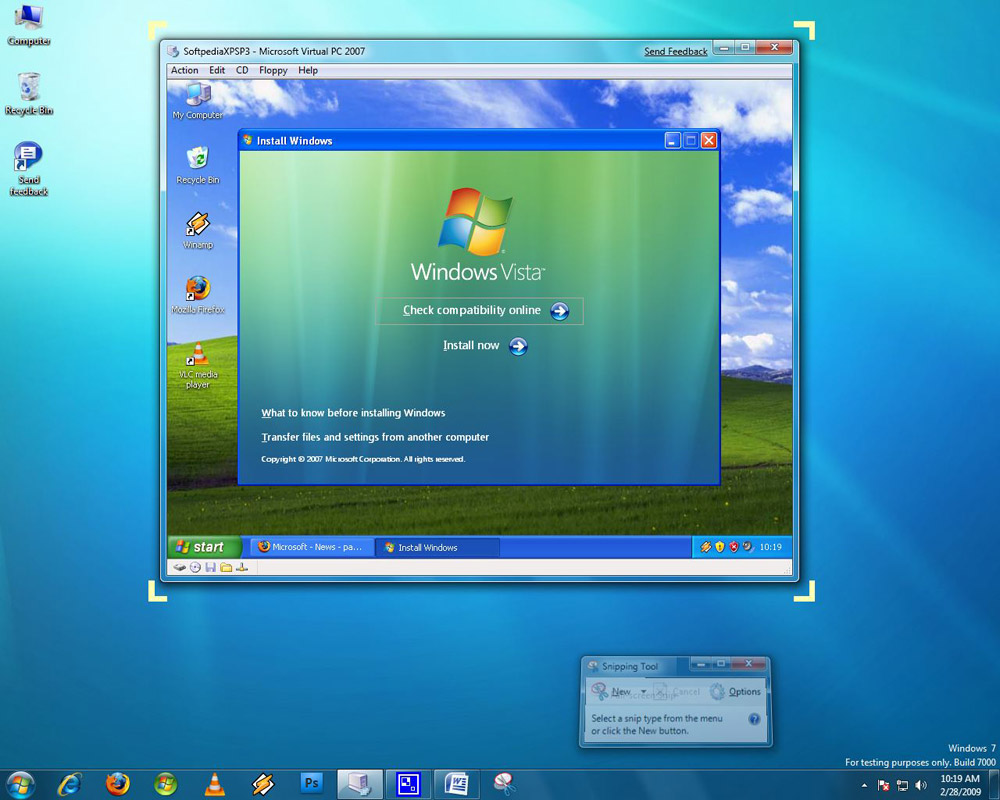
4. You are now all set to upgrade to windows 7 from windows XP. You may check this guide for step by step assistance on installing windows 7 on the computer running XP – How to. 5. After installing Windows 7 by doing doing Custom or clean install, from the external hard disk where you backed them Windows Easy Transfer. 6. After upgrading XP to windows 7, you may reinstall all applications that you were using with windows XP using their original installation disks or set up files.
Windows Easy Transfer makes this easier by generating a report of all programs or applications that you run with Windows XP. You can use this report as a reference in installing all the needed applications in windows 7.While upgrading windows XP to windows 7, all the files and folders on Windows XP are moved to a folder named “Windows.old”. Since this would occupy considerable space, you may run “Disk Cleanup” to delete “Windows.old” folder and get extra disk space.You may have to do this before restoring the transferred files and settings from the external hard disk, if your computer hard disk runs out of space when you restore the files with “Windows Easy Transfer”.Upgrade Windows XP To Windows 7 and enjoy the latest Windows OS, that offers several personalization features and also enhances computer security and performance.
Published:Moving enterprise workstations to Windows 7 doesn't have to be a daunting task. Whether you're migrating a few desktops or hundreds, there are certain steps you can follow to ensure a smooth, problem-free transition.
But regardless, there is no clear method that is best for all organizations. Some will handle upgrades on a machine-by-machine basis, and others will create an image that is installed when the user next logs on. Some organizations will upgrade Windows Vista systems, while others will choose to back up system settings and do complete, new installations and restore user settings (or not). Here are some steps to take when upgrading from Windows XP or Vista:1.
Windows Vista Upgrade To Xp
Determine if the target computer meets minimum hardware requirements.Some computers running Windows XP may not have the resources necessary to run Windows 7. If thisis the case, it may make sense to purchase a new computer with Windows 7 already installed. A new computer, including the operating system, may not cost much more than the licensing fee for the new OS, and the computer will most likely have more RAM, a larger hard drive, and a single- or multicore 64-bit processor. In addition, the new computer will probably have a longer usable life than the older machine running Windows XP.Note that Windows XP is not directly upgradable to Windows 7.
The upgrade can be done in at least two ways. You can upgrade to Windows Vista with migration tools built into Vista, and then upgrade from Vista to Windows 7. The second way - which I recommend - is to back up the user's computer and Windows settings, then install a new version of Windows 7.A tool such as can be used to create an inventory of the hardware and software in an enterprise.
Adobe after effects book pdf. After Effects CC is an application that allows you to create dynamic, visually stunning motion graphics and cinematic visual effects. Download free Getting Started with Adobe After Effects, course tutorial training, PDF book made by Kennesaw State University. Getting Started with.
This inventory can ease the process of determining which computers are candidates for upgrades or clean installs.2. Back up data, applications and settings.If you're following a two-step upgrade path (from Windows XP to Vista to Windows 7), you should back up of all data, apps and settings on the computer. A variety of tools can do this, but Microsoft includes, which can transfer files and settings to a remote hard drive, a flash drive or an office network. Depending upon the amount of data, this can take anywhere from a few minutes to a few hours to complete.Other commercial applications are available to make copies of system settings, data and applications. Easy Transfer does not transfer the actual applications.The is useful for developing system migration strategies.3. Install Vista.Once the settings have been copied, insert the Vista installation disk or copy the image over the network to the workstation being upgraded.
When the application runs, choose 'Upgrade,' and the computer will be updated, with most settings and applications still installed and working. After Vista installation completes, run some applications and make sure that the upgraded computer is running successfully.4. Upgrade from Vista to Windows 7.Once you've backed up user data and settings, insert the Windows 7 disc or copy the installation files from the network's server. Run the installation as an upgrade. Once completed, again log into the network, test the functionality of Windows 7 on the workstation, and test the system. Note that some applications that were written to run on Windows XP may not work natively on Windows 7.
Virtual Windows XP should enable these applications to run on this computer in Virtual XP mode.5. Troubleshoot the migration.If the upgrade fails, try a clean installation from a DVD or an approved image in your enterprise to the target computer.
Once installation is complete, restore the image created using Easy Transfer, reinstall the approved applications, and the system should work for the user.ABOUT THE AUTHORMark Brownstein is a technology journalist and consultant based in Northridge, Calif. He has been editor at technology publications, has written seven books, and is a Microsoft Systems Certified Administrator.
He runs and maintains networks, analyzes and reviews new technologies, and consults on storage and system-related issues. He can be reached at.
New Articles
- Cc Pdf Converter Installer 64 Bit
- Upstairs By Trey Songz Mp3
- Vertex Shader Model 2.0
- Disadvantages Of Adobe Acrobat Reader
- Crack Swift 3d 5
- Rishtey Full Movie Anil Kapoor Dailymotion
- Isuninst Silent Uninstall
- Trutech Tt320 Dvd Player Manual In
- Friend Blaster Pro Cracked 10.2.3 Working!!!!!
- Fdic Bank Sweep Program
- Next Haynes Manual T Shirt
- Telechargement De Autocad 2010 Gratuit
- Tip Tip Barsa Pani Mp4
- Paradox Hoi2 Doomsday Patch
- Chinnari Pellikuthuru Serial Episodes In Hindi
- Hud-red Skin Pack For Windows 7 Nice Theme
- Logik Ir100 Wifi Broadband Internet Radio
- Harry Potter I Czara Ognia Film